Fishing in the Bahamas: An Angler’s Paradise

Fishing in the Bahamas is a rite of passage for any ambitious angler. Picture yourself poling across gin-clear flats just one cast away from a potential world record. Imagine big game battles on the high seas with a tropical paradise as your backdrop. Now think how it feels to do all that and more in a single day. That’s what’s waiting for you on this stunning island chain.

An aerial view of islands in the Bahamas

Those are some mighty fine words, and they’re easy to back up. The Bahamas are home to hundreds of world records for dozens of different species. Sportfishing brings in an incredible $500 million every year. Safe to say, the fishing here’s pretty good. In this article, we’ll cover just what makes it special, and how to make the most of your time in angling heaven.

Chasing Ghosts: Flats Fishing in the Bahamas

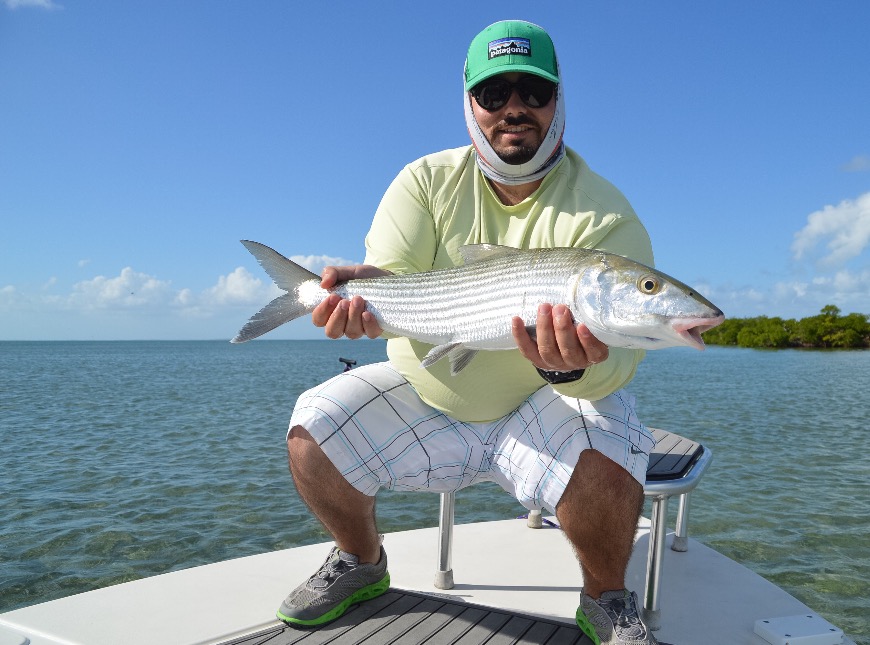
We’ve talked up the Bahamas enough, time to get stuck into what exactly you can catch here. And where better to start than the fish that put the Bahamas on the map? We give you the mighty Bonefish.

A Bonefish underwater on the Bahamian flats

Bonefish may not look like much to the uninitiated, but they’re one of the hardest challenges an angler can face. Tough to trick. Impossible to spot. They spook at the first sign of danger and hit 40 miles per hour as they escape across the flats. Catching one requires patience, precision, and a few prayers to the fisher gods. Small wonder Bonefish drive some anglers to obsession.

If that sounds like your idea of fun, you may want to save yourself the cost of flights and just straight up move to the Bahamas. The country’s clear, sandy flats are the perfect breeding ground for super-sized fish. Five-pound “Ghosts” are the norm here, and more than a few fish have made it into the record books over the years.

When and Where to Fish the Bahamian Flats

A fly fisherman wading in shallow water while fishing in the Bahamas

Let’s make one thing clear from the get-go: There’s no bad time to go flats fishing in the Bahamas, it’s just even better than usual during some parts of the year. Bonefish are at their very best from October–May, when the waters are cooler and the weather is dry. This is also a great time to target other inshore game fish like Permit and Tarpon.

Now that you’ve got your dates sorted, it’s time to pick an island. Again, you can’t go wrong with any of them, but a few spots do take things to the next level. One of the best places to start is Andros, the so-called “Bonefish Capital of the World.” This is the largest island in the chain, and its southern flats are said to hold the largest Bones in the Bahamas.

Don’t limit yourself to one island, though. Bimini, New Providence, Exuma, and Green Turtle Cay all have outstanding flats fishing, as do hundreds of lesser-known islands. It comes down to how good the local guides are as much as the waters themselves.

Blue, White, and Yellow: Bahamas’ Deep Sea Colors

A Blue Marlin jumping out of the water after being hooked by a colorful fishing lure

Some sharp readers may have seen this title and thought, “That’s wrong – the Bahamian flag is blue, black, and yellow!” Congratulations on your expert flag knowledge. However there are three colors that matter in the Bahamian deep sea fishing scene, with three fish to match: Blue Marlin, White Marlin, and Yellowfin Tuna.

The Bahamas used to be famous for their Bluefin bite, but in recent years, it’s the Yellowfin that have been making the headlines. This is thanks both to their size and their sheer numbers. Imagine strike after strike from big, mean, colorful fish. Then imagine the feast at the end of the day. It’s not hard to see why they’re so popular.

If you’re after the heart and soul of the Bahamas’ big game scene, you’ve got to go after the Billfish. White Marlin weighing almost 150 pounds have been caught here in the past. The Blue Marlin bite is so good that they’ve put them on the country’s coat of arms and currency.

A 100 Bahamian dollar bill with a Blue Marlin on it
Talk about putting your money where your mouth is!

Still not enough for you? Don’t worry – these are just the A-listers. You’ll also be battling Mahi Mahi by the dozen and some of the biggest Wahoo you’re ever likely to find. Then there’s the Bigeye and Blackfin Tuna, Sailfish, Sharks – you get the picture, there’s a lot hiding in these deep waters.

Best Time and Place for Big Game Hookups

The great thing about big game fishing in the Bahamas is that all the fish are around at the same time. Visit in the spring or early summer for the full onslaught of Tuna, Marlin, Sailfish, and more. The only exception is Wahoo, which always seem to do their own thing. These guys peak in the winter and move off just as the rest of the gang rolls into town.

In an archipelago of over 700 islands, picking one spot will always be the tough part. The waters around Bimini are a great place to start. Remember all those records set in the Bahamas? Most of them were set here, and yes, many of them were set for Marlin. In fact, the Billfish bite is so good that people regularly travel by boat from Florida just to get in on the action.

A map of the best places for deep sea fishing in the Bahamas, including Bimini, the Canyons, the Channel, the Tongue of the Ocean, and the Exuma Trough

Farther North, the canyons offshore from Freeport on Grand Bahama Island are a serious Yellowfin hotspot, as is the Channel, a huge, underwater valley between Great Abaco and the Berry Islands. In the south, the Exuma Trough between Exuma and Cat Island is an awesome spot.

And then we have the Tongue of the Ocean. Often shortened to TOTO, this is a long trench of deep water between Andros and Nassau. It’s completely sheltered by reefs and shoals. This means that when the high winds whip the water into a frenzy elsewhere, TOTO keeps putting huge fish on your hooks. 

Reeling in a Feast: Reef Fishing in the Bahamas

So the flats are a fly fisher’s paradise and the bluewaters are a big game battlefield, but what if you just want to reel in something tasty for dinner? As always, the Bahamas have everything you could ask for and more.

A Nassau Grouper underwater near a reef in the Bahamas

Reef fishing is fun in the Bahamas because there are so many ways to work one spot. Start by going after Yellowtail Snapper near the surface. After that, you can switch to bottom fishing for Grouper. Finish it all off with a King and Cero Mackerel combo. Not bad, right? Well, that’s just the tip of the iceberg.

Depending on the depth you fish, you stand a chance of reeling in Red, Strawberry (Red Hind), Yellowfin, and Black Grouper. And that’s just the Groupers. You can also catch Yellowtail, Yelloweye, Queen, Mutton, and Mangrove Snapper, as well as Triggerfish, Hogfish, Amberjack, and African Pompano. Talk about a feast!

Another species you may come across is the Nassau Grouper. These guys are big, strong, and highly intelligent, On top of that, they taste delicious. However, they’re actually critically endangered, so we would recommend releasing them whenever possible. You’re not going to be short on fish, after all.

Best Bahamian Reefs and When to Fish Them

A boat anchored over a reef in the Bahamas

Spring and summer are the most active times on the Bahamian reefs. The water is warmer and the fish are more aggressive. However, you can find big fish even in the depths of winter. As we keep saying, there’s never a bad time to go fishing in the Bahamas.

The biggest reef in the country is Andros Barrier Reef. At 190 miles long, it’s actually the third largest barrier reef in the world. These sprawling corals are home to the entire food chain, from small tropical fish and Lobster up to massive Manta Rays and Marlin.

Andros Barrier Reef is the most notable spot, but it’s hardly the only place to fish. From Walker’s Cay in the northwest to Crooked Island in the southeast, the entire chain has great reef fishing. The best part? Most reefs are just a mile or two from shore, meaning you can easily combine them with inshore or deep sea action.

Preserving Paradise

A remote uninhabited island in the Bahamas

If you were looking for a quiet, unspoiled fishing spot, the Bahamas might not be the first name that pops up in your head. Decades of mass tourism have probably polluted the once-peaceful waters and depleted the fish stocks, right? Wrong.

The fishing in the Bahamas is still incredible. New fishing lodges and sportfishing hotspots pop up every year. New records are caught all the time. It seems like we’re still scratching the surface of what this scattered island country has to offer.

How’s that possible? For starters, the Bahamas are huge. There are more than 700 islands, and only a small portion of them are inhabited. On top of that, the country has strict rules in place to protect its fisheries. Long story short, the Bahamas aren’t what they once were – years of tourism have made them into something even more satisfying for the traveling angler.

Types of Sunfish in North America

Sunfish are among North America’s most popular fish. Anglers and food lovers alike regularly name Sunfish as their favorite species. The only thing is, Sunfish is not a species. It’s an entire group of freshwater fish spread across the continent. So, how do you recognize different types of Sunfish? That’s exactly what you’re going to find out. Read on!

longear sunfish Mike Cline cc 3.0
Longear Sunfish (Source: Wikipedia, Mike Cline, CC 3.0)

You can tell most Sunfish apart by looking at a few distinctive features. These include: 

  • The size of their mouth
  • The length of their pectoral fin
  • Body color
  • The opercular flap (the flap at the edge of the gill plate, and the color of its border)
  • Position of the eye compared to the jaw

Oftentimes, at least one of these features is noticeably different in a single species of Sunfish. That’s how you’ll tell them apart. That being said, many Sunfish species have been introduced throughout North America and interbred with local populations. These hybrids are a little tougher to tell apart, so we’ll focus on the naturally occurring ones.

Without any further ado, the types of Sunfish in North America are: 

Redear Sunfish (Lepomis microlophus) 

Average size: 8.5 inches

Redears are native to the Gulf Coast and southeastern US up to North Carolina. These days, you can also find them in the Great Lakes, as well as a few western fisheries.

a redear sunfish

Redears boast small mouths relative to the size of their bodies. They have dark spots, often in a checkered pattern. Their pectoral fins are elongated, reaching past the eyes when folded forward. 

Distinctive feature: A dark inflexible opercular flap, with a red or orange border. This is how Redears got their name.

Green Sunfish (Lepomis cyanellus)

Average size: 5 inches

Green Sunfish are native to central and eastern USA, as well as Ontario in Canada. You can also find them throughout the US. 

a green sunfish

These guys have relatively large mouths, with lower jaws extending to the middle of the eye line. The opercular flap is black with a white border, and the pectoral fin is short and rounded.

Distinctive feature: You guessed it, they’re green, although not across the entire body. Their belly side is often bright yellow.

Redbreast Sunfish (Lepomis auritus)

Average size: 10 inches

Redbreasts are native to the east coast of North America from New Brunswick to central Florida. They’ve also been introduced to a number of states and provinces in the US and Canada.

a redbreast sunfish

They have wider anal fins than most other Sunfish, with darker roots that turn paler towards the edges. Their pelvic fins are elongated with sharp, scythe-like tips.

Distinctive feature: These guys have two! For one, Redbreasts have dark opercular flaps which are unusually long. Their belly side is also reddish or orange in color. 

Bluegill Sunfish (Lepomis macrochirus)

Average size: 8 inches

Bluegills are probably the most popular out of all the Sunfish species in US. Although native to central and eastern US, you can find them throughout the States.

a bluegill sunfish
(Source: Wikipedia, CC 4.0)

Bluegills have small mouths, with upper jaws reaching to the lower line of the pupil. Their opercular flap is dark and flexible. Bluegills’ pectoral fins are elongated, reaching past the eye when folded forward. 

Distinctive feature: Bluegills’ soft dorsal fin has a single black spot.

Warmouth Sunfish (Lepomis gulosus)

Average size: 7 inches

Warmouth Sunfish are native to the Great Lakes and the entire Mississippi River and its tributaries. They’re not widely present outside of these places.

a warmouth sunfish

If Warmouths didn’t have such big mouths, you could easily confuse them with Smallmouth Bass. These guys have red eyes, with stripes stretching from the eyes to the opercular flap. The flap is small and dark, with a red border. Warmouths boast a short, rounded pectoral fin that does not extend beyond the eye.

Distinctive feature: Apart from the red eye, male Warmouths can have a single, red to orange spot on their rear dorsal fin.

Pumpkinseed Sunfish (Lepomis gibbosus) 

Average size: 8 inches

Pumpkinseeds are native to the Atlantic coast of North America from New Brunswick to South Carolina. You can also find them in central and northwestern USA.

a pumpkinseed sunfish

Pumpkinseed Sunfish have very small mouths relative their body size. The opercular flap is flexible, with a white border that has a red spot on the edge. Their pectoral fins are light-colored, ranging from bright yellow to white.

Distinctive feature: Pumpkinseeds have blue lines throughout their gill plates.

Longear Sunfish (Lepomis megalotis)

Average size: 9 inches

Longear Sunfish are native to eastern North America, stretching from the Great Lakes all the way to Florida and Louisiana.

a longear, one of the many types of sunfish

Longears have noticeably longer pelvic fins than most other types of Sunfish. They point almost vertically downward.

Distinctive feature: An elongated dark opercular flap with a dark border, as well as bright blue spots across the body.

And Many, Many More

This has been a rundown of some of the most common types of Sunfish. There are a number of other Sunfish species, and countless hybrid combinations across North America. All of the species we mentioned react well to pretty much any type of bait or lure, so they’re a great choice if you’re looking to hook your kids on fishing. One thing’s for sure though – whichever of these Panfish you get your hands on, you’re in for a tasty treat.

Your turn. Which type of Sunfish is your favorite? Are there any common Sunfish species you think should have made the list? Let us know in the comments below.

Fly Fishing in Miami: Our Top Tips

The fly fishing Miami offers anglers is world class. If you want to catch a trophy fish, surrounded by jaw-dropping beauty, then this is the place for you to come on your next vacation.

Aerial view of Miami Beach
There are plenty of places to go fishing in Miami.

Miami is the only city to be surrounded by two wildlife parks. Featuring exceptional wildlife, beaches, sunshine, food, and culture, the reasons to visit Miami just go on and on.

Fishing in the “Magic City” is truly an awesome experience. You can tick off a lot of species from your angling bucket list in a variety of habitats. Variety is the spice of life after all, and Miami is hot, hot, hot!

What can you catch when fly fishing Miami waters?

When fly fishing in Miami, there are plenty of species to keep you busy – there’s something to catch year round. It’s best to book with a local guide who can let you know which species has an open season at any given time. Once armed with this knowledge, you’ll be reeling in trophy-sized fish in no time.

The prestigious trifecta you’ll want to target includes Tarpon, Bonefish, and Permit.

Tarpon

Fly fish for Tarpon in Miami, held by an angler
There are plenty of Tarpon to target out here!

Book an evening trip for the best chance of reeling in the “Silver King” and let the city lights illuminate your way. Spend 4–6 hours on an action-packed evening trip. Why is an evening trip best, you ask?  Well, Tarpon begin to feed in the evenings and can often be found in schools, so once the action starts, it’s non-stop.

Remember, Tarpon over 40 inches must be kept in the water. You may lift Tarpon under 40 inches out of the water to be photographed, but must put them back immediately afterward. Tarpon is strictly a catch-and-release species. Their prestigious nature comes from the hard fight they’ll give you every step of the way.  They’ll run, jump, twist, and do everything they can to break your line…and they will break it in over 60% of hook-ups.

The Tarpon here are regularly over 50 pounds and can reach sizes of up to 200 pounds. With the windy conditions out in Miami, you’ll need to have honed your fly fishing skills to take on these giant Silver Kings.  

Bonefish

Fly fish for Bonefish in Miami, held by an angler

Another of the “Big Three” is Bonefish, commonly called “the ghost of the flats.” The thrill of the fight with Bonefish comes from finding it. These guys are the ninjas of the water, fast and stealthy. Fly fishing for Bonefish is made more difficult by how hard it is to spot them in the water. Anglers will also need to work out a way to present the fly close to the fish without scaring it away, so previous fly fishing skills are needed. A trophy Bonefish weighs over 10 pounds – that’s a big one!

Permit

Fly fish for Permit in Miami, held by an angler

After Tarpon and Bonefish, try targeting powerful Permit. Like Bonefish, Permit won’t make it easy for you to find them. They can easily be scared away, so you’ll need a flats boat to approach with stealth. It’s not easy to reel in a Permit on the fly, but it can be done. The satisfaction of reeling in this elusive beauty will give you bragging rights out on the flats.

Trophy-sized Permit weigh around 35 pounds, but the average size is anywhere from 12–20 pounds. To be able to catch Permit of any size on the fly and bring it to the boat is a major accomplishment.

Snook

Couple holding a Snook
Will you reel in a Snook when you’re in Miami?

Once you’ve crossed off the leaping three, it’s time to target the sneaky Snook. These guys can reach huge sizes of up to 50 pounds and 4 feet in length. Snook here are clever and know how to break your line, just like the Tarpon. Getting one to the boat is going to be a challenge.

Snook are ambush creatures, so the placement of your fly is super important. Once they’re on your fly, get ready for a fight!

Butterfly Peacock Bass

Angler fly fishing for Bass
The Bass are definitely noticeable!

We can’t forget the freshwater options for fly fishing in Miami. Representing the freshwater species, we present to you the Butterfly Peacock Bass. This beauty is well worth heading inland for and is the most popular freshwater sport fish.

Peacock Bass live in the canals found in Miami. These fish are both hard-fighting and aesthetically pleasing. Their bright green color makes them much easier to spot in the clear waters they reside in. You might think, “So much easier than the Bonefish to catch!” but you’d be wrong. The Peacock Bass offers anglers fishing on the fly a whole new set of hurdles to overcome.

Angler with Peacock Bass

Peacock Bass get more aggressive the warmer they are. Trips in the middle of the day are action-packed. Fly fishermen need to have multiple flies ready to go – when the Bass doesn’t show immediate interest, move on to the next fly. The secret to getting the Bass to bite is in the retrieval of the fly. Have it drop below the fish before quickly reeling in. Even a lethargic Bass will get irritated enough to bite.

Bass are one of the species that anglers new to fly fishing will enjoy, as you don’t need to be as accurate with the fly as you do when targeting the Big Three. You can practice the technique and still catch an awesome fish.

Where to go fly fishing in Miami

There are so many places to cast a fly in Miami. For saltwater fly fishing, you can head into the flats, go out into Biscayne Bay, head into the nearby Everglades, or take a ride over to reefs and multiple wrecks. The opportunities are endless! It’s a good idea to book a trip with a local who can take you to the best hot spots. You don’t want to waste a second of your vacation in Miami by wandering around looking for fish.

Canals of Miami
There are plenty of different canals, flats, bays, and wrecks to fish in Miami.

For freshwater fishing, the extensive canals are where you’ll find Bass. The deeper the water, the more productive it will be. Mix a drop-off with hard structures and you’ll be in for a top-notch day.

When to go fly fishing in Miami

The weather in Miami is incredible year round, even during winter – Miami has the warmest winter weather in the US. December to May is the peak season. Although it’s warmer and drier than the hot and humid summer, prices tend to go up during those six months. Be aware, hurricane season starts in June and lasts till November.

You can catch the Big Three throughout the year. However, Tarpon is especially great in May and June during their annual migration, with the months on either side usually producing good fishing, too. Permit is best from May to November, and Snook peaks in the summer. Your captain can let you know the current regulations and closed seasons for each species.

Bass can be caught throughout the year, but winter is when the action is non-stop, during the dry season in Miami.

What will I be fishing on?

fly fishing from a flats boat
Many anglers fish the inshore waters of Miami aboard flats boat like this.

You’ll spend the day on a small but mighty boat! These include skiffs, flats boats, and bay boats. These boats offer a stable ride and can maneuver into hard-to-reach areas. Your group size will be between 2–4 anglers and you’ll need to only pack the necessities as space is tight.

Do I need a fishing license?

Your fishing license is usually included in the price of your charter when saltwater fishing. For freshwater fishing, everyone in your group over 16 will need to buy a license before the day of the trip.

What should I bring?

Included in the price of your charter are the rods, reels, bait, and saltwater license. Don’t forget your license if fishing in freshwater!

If you’re fishing from shore for Bass in the canals, definitely make sure you’re wearing proper shoes. There are many snakes in the area. Stay aware of your surroundings, as crocodiles call these waters home. When fishing from boats, wear non-marking shoes.

It’s a good idea to bring polarized sunglasses along when fly fishing, to help you see the fish. Bring your polarized shades with a brown or amber tint to them. On the flats, it’s an added bonus if your sunglasses have side shields, too.

Polarized sunglasses
Polarized sunglasses make all the difference when fly fishing the flats.

When fishing for Bass, you’ll need a 6–8 wt rod. For medium-sized Tarpon and Bonefish, an 8–9 wt rod is best. Go bigger for Permit and medium Tarpon and grab your 9–10 wt rod. For large Tarpon, you’ll need a 12 wt rod with spinning gear in the 20 lb class. If only bringing one rod along, a 9 wt will generally be enough to counter the winds and still let you bring in a good-sized fish.

The fly fishing Miami offers is as varied as it can get. Whatever your skill level, there’s a fish out here with your name on it. You can challenge yourself and pick up some new skills from your experienced captain. Head over to Miami and see what’s biting today!

Have you been fly fishing in Miami? What did you think? What other species would you recommend targeting? Let us know in the comments, we’d love to hear from you!

Flounder Fishing in Texas: All You Need to Know

Flounder fishing in Texas really lets you take things to the next level, no matter whether you’re a native Texan or just visiting “The Lone Star State.” This peculiar-looking fish is one of the top three targets here, thanks to its delicious taste and brag-worthy angling opportunities.

If you’re more familiar with ordering Flounder from a menu than catching it, you’ll be blissfully unaware of its interesting aesthetic qualities: Namely, that it has two eyes on one side of its face, and a mouth twisted into a permanent snarl. It may not be the most visually appealing of sea creatures, but when it comes to Flounder fishing in Texas, looks don’t matter! It’s all about the experience.

So, what does “Flounder” mean in Texas?

Man and two children holding a huge Flounder
A Flounder caught in Rockport, TX

“Flounder” means many different things to many different people. If you’re not really an angling aficionado, chances are it conjures up images of the cute, cuddly Disney character. Do you hail from one of the USA’s northeastern states? You probably know it as “Fluke.”

This is because the name is often used as a generic title to describe a whole host of Flatfish species. This can definitely muddy the waters when it comes to knowing what, exactly, you’ll be catching – or eating!

In Texas, the species of Flatfish you’ll be targeting is actually Southern Flounder. It’s widely considered to be the best-tasting variety, and also reaches seriously impressive sizes. Females can grow up to 25 inches in Texas! Since it’s the only Flounder species that is targeted here, it gets to keep that prestigious, standalone name, too.

Where do Flounder like to hang out, and what do they eat?

Basically, the clue is in the family name, “Flatfish”! Owing to their shape and size, Flounder prefer to dwell at the bottom of shallow waters. They like warmer waters, which is why Texas’s Gulf Coast is the perfect location for them. Particularly muddy or sandy coastal floors are extremely desirable to these sneaky fish – they often bury and camouflage themselves in order to ambush their favorite sea snacks.

A Flounder camouflaging itself against the sea floor
A Flounder shows off its ability to camouflage itself!

Speaking of sea snacks, what do Flounder like to feast on? Small fish such as shrimp and mullet are popular, but their favorite prey has to be the mud minnow. This bait fish loves the grassy flats, marshes, and brackish estuaries found along the Texas coast!

One thing you need to know: Flounder aren’t about high-speed chases through the waters to catch their food. Instead, they lie in wait until they spot a tasty morsel, when they quickly propel themselves upwards and outwards to attack. This is when having two eyes on the same side of their body becomes a serious advantage!

Where can I catch them?

Why should Texas be your go-to location when it comes to hooking these Flatfish? Because no matter whether you’re so far north you’re almost in Louisiana, so far south you’re almost in Mexico, or somewhere in the middle, you won’t have to travel far to get to a Flounder-fishing hotspot.  

As this state is known for its intimidating size, we’ve divided our recommended fishing areas depending on where you’re located.

North Texas

Galveston skyline
Galveston, TX

With access to parts of the Northern Gulf of Mexico’s seriously shallow (and Flounder-filled!) waters, you’re in for a treat if you’re fishing in North Texas. There’s a plethora of jetties, outlets, shorelines, bayous, marsh drains, and bays that Flounder love to flock to. The waters up here tend to be pretty muddy, too – great for Flounder, but less so for anglers looking to try out gigging (read more about this below). Here are our recommended departure points:

Map of recommended fishing spots in North Texas
  • Sabine Lake. This shallow water system is where the famous “fall Flounder run” takes place. Visit in November to really take advantage of it!
  • Galveston Bay. This collection of bays is perhaps the most famous fishing location in North Texas, thanks to its impressive size – and you’ll find plenty of Flounder on offer here.
  • Matagorda Bay. This estuary bay leads directly into the Gulf of Mexico, and has a shallow shoreline that makes the perfect home for an abundance of Flounder.

Central Texas

The inshore waters that Flounder love so much take on a whole new personality here. Rather than the murky muddiness of North Texas’s fishing grounds, you’ll get to explore some crystal clear, shallow fishing grounds. Head to one of these destination points, and get those gigs ready!

Map of recommended fishing locations in Central Texas
  • Port O’Connor. Want to catch Flounder like a native Texan? This small fishing village is Rockport’s lesser-known neighbor and offers up local-style angling on quiet, clear waters.
  • Rockport. This Coastal Bend location has direct access to an enviable variety of warm flats and bays – Flounder can’t resist these waters, and neither should you!
  • Port Aransas. This Central Texas staple is surrounded by bays, flats, oyster clusters, and plenty of other fishing grounds that huge Flounder love to lurk in.

South Texas

Aerial shot of Laguna Madre
Laguna Madre

When it comes to Flounder fishing in South Texas, there’s one area that takes the cake. Spreading from Baffin Bay to Boca Chica, Laguna Madre is the only name you need to know when it comes to inshore fishing down here!

Think Florida’s famous flats, but on a much larger scale (everything is bigger in Texas, after all), and you’ll get an idea of how plentiful these waters are. Here are some of the hottest Flounder spots that “Mother Lagoon” has to offer:

  • Upper Laguna Madre. The best access points are around Baffin Bay, as well as the surrounding tributaries.
  • Lower Laguna Madre. Port Mansfield is a particularly productive starting point, as well as the Arroyo Colorado.

How can I catch them?

If you’ve always considered giving angling a go, but are put off by the much-circulated stereotype of a lonely fisherman with just his rod for company, then Flounder fishing in Texas will give you a whole different perspective on the matter.

Here’s a quick guide to the various ways that you can hook yourself a delicious dinner – without a rod and line in sight, if you so choose.

Rods and Reels

Man with Flounder on the end of a rod and line
Flounder fishing, the conventional way!

There’s a reason why this type of fishing has remained so popular! It’s a classic, and some would argue that there’s nothing better than sticking to tried-and-true techniques capable of standing the test of time.

If you’re a traditionalist at heart, then chances are you’ll appreciate the art-form of selecting the right bait, preparing your hook, and casting off into the shallows – if so, you’ll fit right in with North Texan fishermen.

When you’re trying to hook a Flounder this way, most anglers recommend mimicking your target’s favorite meal, which means getting your hands on mud minnows or small shrimp and mullet.

Soft plastic jig heads can also get the job done, especially when scented like your Flounder’s prey. Flounder have seriously sharp teeth, so you’ll want to use a heavy braided line to stop them from biting through.

Gigging

Two men holding a gigging spear with a Flounder attached

Looking for something a little bit different? Luckily, you’re about to discover that Flounder fishing in Texas isn’t just limited to sitting on a boat, armed with conventional fishing tackle. Despite the seemingly placid nature of this fish, there are some pretty exciting ways to catch it!

If you mention “Flounder” to a native Texan fisherman, especially along the central coast, there’s one technique that will usually get a big mention: gigging.

Imagine cruising along the notoriously clear and shallow waters of Central Texas, on the hunt for some delicious Flounder – but you’re traveling under the cover of darkness, armed with a torchlight and a gigging spear, rather than a rod and line.

Three men gigging at night on a lighted boat
What gigging from a boat can look like!

You’re intently watching the waters, looking out for any movements or strange shapes that could hint at a cleverly-camouflaged Flounder. And when you see one? You pounce, driving the spear into your target.

It might sound dramatic, but this is actually a very common way of targeting Flounder in Texas, and yields plentiful results. These trips are action-packed but relatively simple to get to grips with, making them the perfect choice for those who want an exciting and truly Texan Flounder-fishing experience!

Bowfishing

Always been interested in archery? Well, how about firing off a bow and arrow from the water? Bowfishing for Flounder is a technique that’s guaranteed to amp up the action for even the most discerning of thrill-seekers!

Fisherman aiming bowfishing gear at water
An example of bowfishing

Although less popular than conventional casting and gigging techniques, some Flounder hunters swear by bowfishing when it comes to filling their freezer with this tasty fish.

Armed with special archery equipment, bowfishing will see you heading out to your chosen fishing grounds once the sun has set. You’ll be keeping a careful watch for your tasty target and once it’s in your sights, it’s just a case of ready, aim, and…fire!

It might sound simple, but there’s a special challenge to conquering this technique. As water refracts light, it creates the illusion that your Flounder is in a different location than where it really is. Because of this, you’ll have to really focus on your target. It’s the perfect technique if you want to learn a new skill, or test your precision!

Seasonality

Technically Flounder are a year-round fish in Texas, but the best time to target them is during their fall migration to the Gulf. This usually takes place between October and December, and is also known as the “Flounder Run.”

Family posing behind a table of Flounder
Visit during the Fall Flounder run, and leave with a bounty like this!

If you want to gig for Flounder like a true Texan, be aware that this technique is not allowed all throughout November, in order to protect spawning female fish. For the rest of the year, you can gig to your heart’s content!

What should I bring?

Luckily, it’s a pretty simple process! If you’re age 17 or older, you’ll need to purchase a license from the Texas Parks & Wildlife Department. This can be done online, and we recommend that out-of-state guests purchase a single day All-Water license.

Generally, you can expect top-quality gear to be provided for you if you choose to fish with a local charter or guide, including gigging equipment. The only exception is bowfishing, which is usually only available via special request.

Whether you want to imagine yourself as an intrepid explorer whose survival depends on gigging a tasty meal, or simply feel like exploring incredible fishing grounds the old-fashioned way, Flounder fishing in Texas is as exciting and diverse as the Lone Star State itself. Come discover it for yourself!

A Complete Guide to Salmon Fishing in the Bay Area

Happy fishermen on a Salmon fishing trip in the Bay Area
First class Salmon fishing action in 3…2…1!

If you’ve never experienced the Salmon fishing the Bay Area has to offer, you might be wondering what the hubbub is about. Well, some say that the Salmon runs around the Golden Gate Bridge and along the coast of Marin County give Alaska’s Salmon fishery a run for its money. That alone speaks volumes.

Generations of fishermen in the Bay Area have dedicated their lives to pursuing (the sometimes elusive) Salmon, and finding this amazing fish is in their blood. And after you’ve given it a try, chances are you’ll be hooked, too.

In California, the state of sunshine and Hollywood, the fishing action is nothing less than stellar. If you’re looking for your next angling adventure, the Bay Area is a great place to start.

Salmon Species in the Bay Area

Three anglers holding their daily limit of Chinook Salmon in the Bay Area

Among the five species of Pacific Salmon you can encounter on the West Coast, Chinook (King) Salmon reign supreme in the broader Bay Area. You can also spot Coho (Silver) Salmon here and there, but they’re a much less common sight than the King.

The Salmon season usually starts in April (the dates change every year) and lasts until October, at least for sportfishing. Because of the worrying decline in spawning Salmon in the last decade, commercial fishermen have much more restricted regulations and seasonality.

The Short Story of the Mighty Salmon

Chinook Salmon swimming upstream a waterfall
Salmon swimming upstream is one of the most unusual sights you’ll come across.

Salmon are anadromous fish – they’re born in freshwater, but soon go into the ocean to feed and grow, only to return to their home waters to spawn. Their astonishing physical ability to adjust to such different conditions makes them unique.

Most fish can’t survive the change in salinity and water temperature, but that’s not the case with juvenile Salmon (also known as smolts). Once they’ve hatched and spent some time in freshwater, they seek out food around the Cordell Bank and Farallon Islands, where they stay until they’re fully grown.

After two or three years, Salmon are ready to go back home and spawn. There are debates about how exactly Salmon find their way home with such accuracy. These species are famous for their epic migration upstream to reach their spawning grounds and final resting place.

For Coho Salmon, home is Lagunitas Creek and other tributaries at Samuel P. Taylor State Park. Kings prefer the waters of the Klamath and Trinity River for spawning and the Sacramento-San Joaquin River system is their top destination in the fall. While going upstream, Salmon use astonishing amounts of energy which causes them to take on bright and varied patterns, depending on the species.

The females make gravel nests (called redds) to lay their eggs, which males then fertilize. Up to seven days after this final act, the Salmon die, but their role in the ecosystem doesn’t end there. Their bodies then serve as food for animals and their remains keep the rivers and streams fertilized.

When it comes to Salmon, their impact on everything from economy to culture can’t be overstated. It’s hardly a surprise that the area around the San Pablo, Suisun, and San Francisco Bay estuaries rely so heavily on their survival and abundance.

The Migration of Salmon in the Bay Area

Gif showing the migration of patterns of Chinook Salmon in the Bay Area

Salmon that migrate into the rivers and creeks of the Bay Area trickle down both from the north (Tomales Bay) and work their way up from the south (Santa Barbara) of California. On their long journey, they pass spots that are known for their superb Salmon productivity – San Francisco Bay, Marin County’s coastline, Tiburon Peninsula, Half Moon Bay, and many more.

After that, they start their long upstream travels to countless freshwater streams and rivers, Sacramento River being the most popular fishery among many. Here’s an overview of just a few of the most productive Salmon fishing grounds.

Where to Go Salmon Fishing in the Bay Area

From April to mid-October (dates change every season), certain parts of the Bay Area become the ultimate playground for Salmon fishermen. Most of these spots are “interception fisheries,” which makes the angling experience all the more exciting, if somewhat uncertain. It takes the right mix of local knowledge, skill, and luck to take you to the Salmon hookups you’ve dreamed of.

The Farallon Islands

Waves crashing around the rocks of the Farallon Islands

You’ll find the Farallon Islands some 35 miles from San Francisco Bay and the Golden Gate Bridge. This is a well-known hotspot among local guides both because it offers excellent deep sea fishing opportunities and Salmon action. You will find the best bite right in between the mainland and the islands. Want more options in this area? Right offshore from Stinson Beach and around Duxbury Reef is the place to be for some wild Salmon action.

Half Moon Bay

Fishing boats in the Half Moon Bay Marina

When you mention Half Moon Bay to any fisherman in the Bay Area, they’ll immediately know you’ve set your sights on catching Chinook Salmon. This bay is particularly productive in the first months of the Salmon run, when anglers from all over the country flock here to fish for Kings. These fishing grounds are rich in the bait fish Salmon feed on, and they’re close to a range of hotspots like Davenport and Pigeon Point to the south and the Golden Gate Bridge to the north.

San Francisco Bay

A fishing rod with a view of the San Francisco Bay and the Golden Gate Bridge

One of the best places to fish for Chinook Salmon on the West Coast is San Francisco Bay. In the summer and fall months, you’ll get the chance to chase King Salmon with a spectacular view of the Golden Gate Bridge, and that sight alone should be enough to have you reaching for your rod.

There’s a route that Salmon take through the bay to their spawning grounds, dubbed “The Salmon Highway.” It’s one of the best fishing grounds for trolling in the bay, and for good reason. This is a great chance to land massive 20–40 lb Chinook that will fight you for every inch of the line. The effort will be well worth it!

The Salmon Highway runs from the Marin County coast all the way past the Golden Gate Bridge and Tiburon Peninsula to the Carquinez Strait. If you cast your line at the right time of the season, the Highway will yield an excellent catch. From there, Salmon are en route to the Sacramento River, where they will spawn in its numerous streams and tributaries.

Pillar Point Harbor is one of the best known spots here when you’re looking to hook your next trophy King. If you can’t wait for the Salmon season to start, Half Moon Bay is the place to be in April and May.

Sacramento-San Joaquin Delta

The aerial view of the Sacramento-San Joaquin Delta

On the eastern border of the Bay Area stands the Sacramento-San Joaquin Delta, or simply “the Delta” among locals. This fishery doesn’t need much introduction, as it’s one of the best places to catch your Salmon limit. This mix of freshwater from the Sacramento River and saltwater from the Pacific Ocean is a significant crossroad in the Chinook Salmon migration. From here, the fish branch out to the river tributaries to find their birthplace and make their spawning nests. You’ll have the most success casting your line around the depressions in the riverbed and deep tidal waters where Salmon like to hide.

Bay Area Salmon Fishing Techniques

A fisherman holding a good-sized Chinook Salmon with beautiful nature in the background

Generations of fishermen in the Bay Area have developed foolproof ways to get Salmon to bite. Trolling and all its “relatives” work best here, but it’s the choice of the right live bait that is a game-changer. Another trick is to start your trip with a variety of setups dropped at different depths. So let’s focus on different trolling tactics that will prove most efficient in your hunt.

Drift Mooching

Drift mooching for Salmon in the inshore waters is a recipe for success in the summer months. Your boat will slowly drift with the current, with fishing lines rigged with dead bait dropped beneath the vessel. If you’re looking for quality over quantity of fish, then drift mooching is a good approach. Follow the state fishing regulations, and use barbless circle hooks while mooching.

Trolling with Downriggers

When you’re fishing for Salmon, following the schools of bait fish is a foolproof way to get on the bite. Trolling with downriggers is one of the most precise techniques to use when you’re fishing different depths. You can cover a lot of water by using two lines on each downrigger, in various depths. Combine that with slowly circling the school of bait fish and it’s only a matter of time before the rods will start springing up. Chinook Salmon won’t be able to resist herring and frozen anchovies on your line.

How to Prepare for a Day of Salmon Fishing

A happy child holding a massive Chinook Salmon

The Bay Area fishery is all the more appealing because you won’t need any special preparations before your trip. Local guides will provide their invaluable expertise, as well as all the necessary fishing tackle, live bait, and lures. Some of them will even clean the catch for you after the trip.

Everyone in your fishing group age 16 and older needs to have a valid California fishing license with them. Your captain will explain the local laws and regulations you need to abide by, and these can change from area to area. Because the weather can change quickly, bring rain gear and dress in layers to protect yourself from the cold. If you’re going on longer (8+ hours) trips, don’t forget to pack plenty of food and drinks, you’re going to need it.

The Salmon fishing the Bay Area is famous for is coming back with a bang. As the Salmon population begins to grow every year, so does the enthusiasm of avid anglers. Once you feel the tug of a headstrong King on your line, your fishing priorities will shift forever.

Are you thinking about going Salmon fishing in the Bay Area? Do you have any advice for first-timers? We’re excited to hear your stories in the comments section!

17 Biggest Fish Ever Caught

Did you ever wonder what the biggest fish ever caught looked like? With all due respect to your imagination, we wouldn’t blame you for underestimating how impressive these beasts really were. Today, we’re looking at the 17 biggest fish ever caught. 

a great white shark

For this list, we’ve only included fish that were officially approved as IGFA All-Tackle World Records. Over the years, there have been cases of people catching even bigger fish. These, however, were either caught by more than one person, or failed to meet other IGFA World Record requirements.

As you’d expect, most of these giants are from the Billfish and Shark families, but there are a few surprise entries, too. 

You’ll notice that a lot of these records date back at least a few decades. Back in the day, catch and release was a rare sight, and fishing regulations weren’t nearly as strict. Still, each of the catches you’re about to see required incredible amounts of skill and dedication to pull off. They officially are the biggest fishing feats in history.

Without further ado, the 17 biggest fish ever caught are:

17. Goliath Grouper – 680 lb

Location: Fernandina Beach, FL

Date: May 20, 1961

a 680 lb IGFA World Record  Goliath Grouper
Image source: IGFA

Back in the day, Fernandina Beach was famous for its Goliath Grouper fishery. Up until 1990, anglers could harvest these critters, but with their population dwindling, regulators decided to ban their harvest. All in all, this record isn’t going anywhere anytime soon. Angler Lynn Joyner caught this 680 lb Goliath using a Spanish Mackerel.

16. Bull Shark – 697 lb 12 oz

Location: Malindi, Kenya

Date: March 24, 2001 

a 697 lb, 12 oz IGFA World Record Bull Shark
Image source: IGFA

Angler Ronald de Jager successfully caught this record-breaking Bull Shark by trolling a live Yellowfin Tuna. The catch broke the previous 1994 record by 12 ounces. 

15. Dusky Shark – 764 lb

Location: Longboat Key, FL

Date: May 28, 1982 

a 764 lb IGFA World Record Dusky Shark
Image source: IGFA

In 1982, Warren Girle pulled in this world record on a Bonito off Longboat Key, Florida.

14. Thresher Shark – 767 lb

Location: Bay of Islands, New Zealand

Date: February 26, 1983

a 767 lb IGFA World Record Thresher Shark
Image source: IGFA

David Hannah caught this Thresher using Kahawai Salmon. Catching a Thresher of any size requires a great deal of skill, because these monsters are known for bashing the hook and bait with their tail before moving in for the kill. This is why Hannah’s record is even more impressive. 

13. Bigeye Thresher Shark – 802 lb

Location: Tutukaka, New Zealand

Date: February 8, 1981

an 802 lb IGFA World Record Bigeye Thresher Shark
Image source: IGFA

A couple of years before David Hannah, Dianne North reeled in an even bigger Thresher. She trolled a Kahawai to hook the fish and then fought the beast for three hours and 45 minutes. What’s interesting is that the two catches occurred just over 30 miles away from each other.

12. Pacific Bluefin Tuna – 907 lb 6 oz

Location: Three Kings Islands, New Zealand

Date: February 19, 2014

a 907 lb IGFA World Record Pacific Bluefin Tuna
Image source: IGFA

Angler Donna Pascoe battled this Bluefin for over four hours, and in some very tough weather conditions. For her impressive catch, Ms. Pascoe received the IGFA Best World Record award for 2014.

11. Swordfish – 1,182 lb

Location: Iquique, Chile

Date: July 7, 1953

a 1182 IGFA World Record Swordfish

After more than 60 years, Lou Marron’s historic record still stands. It’s a testament to how people once used nothing but angling to catch the ocean’s most fearsome creatures. Lou caught the 14′ Swordfish by trolling a live Bonito.

10. Shortfin Mako Shark – 1,221 lb

Location: Chatham, Massachusetts

Date: July 21, 2001

Image source: IGFA

Luke Sweeney caught this fearsome Mako during the Oak Bluffs Monster Shark Tournament in 2001. Luke was actually aboard the smallest boat in the tournament, a 24′ World Cat, when he broke the record. The fight lasted three hours, but ultimately, the Mako made it to the scales for weigh-ins.

9. Great Hammerhead Shark – 1,280 lb

Location: Boca Grande

Date: May 23, 2006

a 1280 lb IGFA World Record Great Hammerhead Shark
Image source: IGFA

Charter captain Bucky Dennis usually fishes for Snook and Tarpon. However, according to him, when Tarpon come to Boca Grande, so do the Hammerheads. Bucky caught this 14.5′ Shark using a stingray for bait. The Hammerhead hauled his 23′ boat almost 12 miles out into the Gulf.

8. Sixgill Shark – 1,298 lb

Location: Ascension Island, British Overseas Territories

Date: November 21, 2002

a 1298 lb IGFA World Record  Sixgilled Shark
Image source: IGFA

Although you can find them worldwide, Sixgilled Sharks just aren’t fish you see everyday. Angler Clemens Rump caught this shark off the remote Ascension Island, in the middle of the Atlantic.

7. Pacific Blue Marlin – 1,376 lb

Location: Kaaiwi Point, Kona, Hawaii

Date: May 31, 1982

a 1376 lb IGFA World Record Pacific Blue Marlin
Image source: IGFA

Trolling a kita lute, angler Jay de Beaubien managed to catch this Pacific Blue Marlin in under an hour! Jay’s record nearly fell in 2015, when an angler caught a 1,368 lb Blue Marlin off the very same Hawaiian coast. 

6. Atlantic Blue Marlin – 1,402 lb 2 oz

Location: Vitoria, Brazil

Date: February 29, 1992

a 1402 lb 2 oz IGFA World Record Atlantic Blue Marlin
Image source: IGFA

Fishing off Vitoria, Brazil angler Paulo Amorim caught this grander trolling a Molecraft lure.

5. Atlantic Bluefin Tuna – 1,496 lb

Location: Aulds Cove, Nova Scotia, Canada

Date: October 26, 1979

a 1496 lb IGFA World Record Atlantic Bluefin Tuna
Image source: IGFA

Nova Scotia is famous for its Bluefin Tuna fishery. Bluefins are much more strictly regulated these days, but regardless, Ken Fraser’s 1979 record still seems almost unbeatable.

4. Black Marlin – 1,560 lb

Location: Cabo Blanco, Peru

Date: August 4, 1953

a 1560 lb IGFA World Record Black Marlin
Image source: IGFA

Angling legend Alfred C. Glassell Jr. caught this enormous Black Marlin way back in 1953, making it one of the longest-standing IGFA World Records to date. This Marlin, along with a number of other fish Glassell caught, comprise a permanent exhibit in the Houston Museum of Natural Science.

3. Greenland Shark – 1,708 lb 9 oz

Location: Trondheimsfjord, Norway.

Date: October 17, 1987

a 1708 lb 9 oz IGFA World Record Greenland Shark
Image source: IGFA

Using a herring as bait, Norwegian angler Terje Nordvedt caught one of the biggest Sharks ever. This was one of the rare times people could see the longest living vertebrae on dry land. These sharks often live longer than 400 years!

2. Tiger Shark –1,785 lb 11 oz

Location: Ulladulla, Australia

Date: March 28, 2004

a 1785 lb 11 oz IGFA World Record Tiger Shark
Image source: IGFA

This record is a little controversial. When Kevin J. Clapson weighed his enormous Tiger shark in 2004, he thought he broke a 40-year-old record. However, since his catch was only 11 ounces heavier than Walter Maxwell’s catch from 1964, the ruling was that the record was tied. 

1. White Shark – 2,664 lb  

Location: Ceduna, Australia

Date: April 21, 1959

a 2664 lb IGFA World Record White Shark. This is the biggest fish ever caught, at least officially
Image source: IGFA

Alfred Dean’s 1959 record is by far the biggest fish ever caught and approved by the IGFA. Great White Sharks are a protected species almost everywhere these days, so it seems that Dean’s record is here to stay.

All of the catches on this list represent incredible feats by some of the best anglers on earth.  With today’s conservation-oriented regulations, most of these won’t be broken any time soon. But that’s a not a bad thing – we’ll have more of these incredible creatures roaming the oceans for years to come. Besides, we’ll always have lists like this one to remind us of how impressive these beasts really are.

Your turn. Which of the catches on our list is the most impressive in your mind? Which of these records do you think anglers will break first? Let us know in the comments below.

9 Most Unspoiled Vacation Spots in America

Summer’s here. It’s nearly time to escape the heat and have some fun on the water. There’s nothing like a few days by the sea or a riverside retreat. But it seems like most towns are more tourist trap than fishing village these days. If you’re looking for somewhere a little more real this summer, you’re in luck. We’ve put together a guide to the most unspoiled vacation spots in the US.

A view from the water of an unspoiled fishing town in Maine, with a small dock and several houses next to the water

Some of these places are small communities that seem locked in time. Others are classic summer retreats that have managed to keep their spirit and soul along the way. The one thing they all have in common is a sense that there’s more to the town than cheap souvenirs and expensive resorts. That, and easy access to some stunning stretches of water.

Port St. Joe, FL

An aerial view of the unspoiled fishing town of Pot St Joe, FL.

Yes, even Florida has undiscovered gems. Hidden on the Sunshine State’s “Forgotten Coast,” Port St. Joe is an old oyster town that the big hotels passed by. It has the same beautiful beaches and great weather as nearby cities, just without the towering resorts and huge summer crowds. Instead, you’ll find a sleepy fishing village with a friendly, old-timey vibe that you can’t help but fall in love with. It pitches itself as “a small town with a big heart,” and that’s exactly what it is.

So what is there to do? Firstly, fish! The surrounding shallows are full of Tarpon, Trout, Redfish, and more. Head farther out to reel in Gulf Coast favorites like Red Snapper and Cobia. Come during Scallop season, and you’re in for the perfect family fishing trip, splashing and diving in the warm shallow water as you fill the boat with delicious shellfish.

While you’re there, make sure to keep an eye out for manatees and rare birds. The coastline around Port St. Joe is some of the best-preserved in the state. It’s a haven for all kinds of exotic wildlife. Explore the local parks and preserves for your best chance of spotting rare species, or just hit the sands for the ultimate relaxing beach break.

Solomons Island, MD

A sailboat moored near some houses in Solomons Island, Maryland.

It’s easy to stay untouched by the modern world when you’re miles from major cities. Solomons Island has done something special: keep its small-town vibe just a stone’s throw from the nation’s capital. Solomons sits on the meeting of the Patuxent River and the Chesapeake Bay, an easy drive from downtown DC. Even so, its shaded streets and pretty waterfront feel a million miles from the stress of the modern world.

The fishing around Solomons Island is just as timeless as the town itself. Take on trophy Stripers and monster Bluefish out in the Chesapeake Bay, or head upriver for Catfish, Crabs, and even Largemouth Bass. You can also find Black Seabass, Sheepshead, Flounder, and so much more in the local waters, making for a real fishy feast.

There’s plenty of fun off the water, too. Walk the scenic Calvert Cliffs or explore the Annmarie Sculpture Garden. Take a tour of the historic Drum Point Lighthouse, or just stroll along the pleasant harborfront. There are all kinds of ways to take it easy here. It’s the perfect escape from the hustle and bustle of DC life.

Oak Bluffs, MA

An aerial view of Oak Bluffs on Martha's Vineyard, MA, one of the most unspoiled vacation spots in America.

Martha’s Vineyard isn’t exactly undiscovered. People have been vacationing here since the 19th century, after all. Even so, there are some unspoiled vacation spots on the island. Oak Bluffs is one of them. Sitting on the northern shore of Martha’s Vineyard, the town has managed to keep its local charm alive as it welcomes ferries and private boats from the mainland.

Long before the island became a tourist hotspot, Oak Bluffs was home to a large whaling industry. Obviously, those times are in the past, but you can still catch some real monsters while fishing around Martha’s Vineyard. From Striped Bass and Bluefish to Mako Sharks and Bluefin Tuna, there’s no telling what you might find on the end of your hook!

After a hard day’s fishing, you can choose any of a hundred ways to unwind. Discover Oak Bluffs’s picture-perfect Gingerbread Cottages (officially called Martha’s Vineyard Camp Meeting Association, or more simply “The Campgrounds”). Catch the brass band playing in Ocean Park Gazebo (as they have done for over 150 years). Get out and explore the coastline. You’re never short on fun, free activities here.

Capitola, CA

An aerial view of the unspoiled vacation spot of Capitola, CA, with a fishing pier stretching into the water and colorful houses in the distance

Heading over to the California Coast, Capitola is a colorful gem hidden in plain sight. Sitting on the northern edge of Monterey Bay, this pretty resort town is just a stone’s throw from San Jose. Nonetheless, it keeps the laid-back West Coast vibe very much alive. It’s also perfectly placed for some epic angling.

Monterey Bay is a wonderland for fishing enthusiasts. Head to the beach or cast from the rocks for shore fishing staples like Surfperch and Rockfish. Climb aboard a boat, and you can add Salmon, Halibut, and even Tuna to the list. Don’t spend all your time on the water, though, because there’s plenty to sink your teeth into back in town.

Capitola is best-known for its brightly-colored beachside houses. These are well worth checking out, but they’re not why the town’s on our list. Capitola is full of quirky boutiques and funky restaurants. You have fun events throughout the summer, like the Capitola Beach Festival. You can also enjoy free Twilight Concerts in Esplanade Park. And if that all gets to be too much, you have the whole of Monterey Bay to explore!

Fairhope, AL

A pristine beach in Fairhope, Alabama, with an old fishing pier in the distance

If you’re looking for a friendly, honest welcome there’s no place like Alabama. Fairhope proves that, with true Southern charm and a ton of fun. The town sits on the Mobile Bay, within easy reach of the city and the coast. You can enjoy the best of both worlds without fighting the huge numbers of tourists you’ll find in classic Gulf Coast hotspots.

That’s not to say you’ll be missing out on the Gulf of Mexico’s incredible fisheries! Mobile Bay is a goldmine for inshore anglers, full of monster Redfish, Trout, Sheepshead, Cobia, and so much more. If that’s not enough, you can always head into the Gulf to reel in delicious Red Snapper or hard-fighting Kingfish.

The best part? Once you’re done with sea and sand, you can escape back to a fun, inviting town that just begs to be explored. Fairhope prides itself on its pedestrian-friendly center full of locally-run shops. Walk the pretty streets of Antebellum buildings, shaded beneath sprawling live oaks. Head to the farmer’s market to pick up some groceries. Watch the sun set over Mobile Bay. It’s the perfect escape from Gulf Coast crowds.

Lewes, DE

two vacationers on a wooden walkway on a beach in Lewes, Delaware. Houses are visible in the distance on the right.

Lewes is a small town with a big history. It was home to the earliest European settlement in the state, and is full of buildings dating back to the 17th century. This is why locals fondly refer to Lewes as “The First Town in the First State.” If you’re looking for a charming seaside spot with a fascinating heritage and heaps of character, you’ve come to the right place.

There’s a good reason people settled here so early. Lewes sits on the mouth of Delaware Bay. It has unbeatable access to every fish swimming in or out. This is the place to be if you’re after big Striped Bass or Weakfish (the state fish of Delaware). Head offshore, and you can take on monster Sharks, Tuna, and even Marlin around the infamous deep sea canyons.

After all that hard work, you’ll need some R&R. Luckily, Lewes Beach has more than enough white sand and sunshine to go around. Once you’ve regained your strength, you can visit the town’s museums and walk the streets of Lewes Historic District. Grab some food at one of many local eateries, then round off the day with a relaxing afternoon and some stunning views in Cape Henlopen State Park.

Hood River, OR

A view over the Columbia River of the town of Hood River, Oregon, with mount Hood visible in the distance

Every town on our list balances fun and beauty, but none of them offer the pure postcard beauty of Hood River. Nestled on the mighty Columbia River. Backed by the fairytale Mount Hood. Hood River is almost too scenic for its own good. This storybook setting holds a very real heart, though, with plenty to do, see, learn, eat, and of course, fish.

The Columbia River needs no introduction among freshwater fans. Salmon, Steelhead, Sturgeon – there’s no end to the monsters you can find in these cool currents. It’s also an awesome spot to fill up on delicious food fish (looking at you, Walleye). And that’s just one river, the Deschutes River is famous for its wild Trout, and the Hood River itself has a great Steelhead run.

Fishing isn’t the only way to enjoy these waters, mind you. Among those in the know, Hood River is “The Windsurfing Capital of the World.” Speedy sailboarders prove this all summer long in events like the Hood River Gorge Cup. Prefer to stick to dry land? Mount Hood is a trekker’s paradise. Maybe you just want to unwind with a tasty beer from a local microbrewery? Whatever you’re after, Hood River’s got you covered!

Wanchese, NC

The harbor and lighthouse in the fishing town of Wanchese, North Carolina. The sun is rising out of the sea in the distance.

Twenty years ago, the whole of the Outer Banks was an unspoiled gem. Since then, more and more people have been heading to OBX in search of sun, sea, and super-sized fish. The tourist train has crashed through many classic fishing towns, and working docks have been overshadowed by resorts and hotels. Not so in Wanchese. This off-the-beaten-track town keeps its old-time spirit alive while still opening its arms to traveling anglers and vacationing visitors.

Fishing out of Wanchese comes down to a simple but difficult choice: bay or bluewater? The shallows of the Croatan and Roanoke Sounds are about as good as it gets if you like pristine seagrass and tailing Redfish. Head out into the Atlantic, and you’ll be in the Gulfstream battling Tuna and Billfish before you know it. Then you’ve got Stripers, Seatrout, Cobia, Sharks – the only limits are your time and ambition!

Wanchese is no metropolis. If you want pumping clubs and exclusive exhibitions, go to New York. What Wanchese offers is a small town with rustic charm and some gorgeous scenery. Learn about the local fishing heritage, explore surrounding wildlife reserves, or just lounge on a soft sandy beach. Feast on some of the freshest seafood you’ll ever try, then relax under a million stars with a cool breeze blowing off the ocean.

Stonington, ME

Classic Downeast lobster fishing boats in the harbor in Stonington, Maine, one of the most unspoiled fishing towns in the US.

Last but definitely not least on our list of unspoiled vacation spots is Stonington. This unpretentious Downeast Lobster port often gets missed on the tourist trail. It has kept its heart and soul alive as a result. This is a working harbor and one of the most important commercial Lobster fisheries in the state. It’s also a beautiful village nestled among the million islands of Penobscot Bay.

At its heart, Stonington is all about fishing. Whether it’s hard-fighting Stripers, tasty Mackerel, or the endless Lobster the area is famous for, you’re never short on species to target. The rocky shores of Deer Isle are a challenge and a joy for any shore angler. If that’s not enough, head over to nearby Acadia National Park for some world-class Trout, Salmon, and Bass fishing.

Downeast Maine’s rugged coastline is one of the most untouched parts of the country. It’s a real treat for outdoorsy types. Hike through primordial forests shrouded in fog. Stroll around centuries-old harbors. Visit in July to catch the annual Fisherman’s Day celebration, where locals honor their seafaring heritage with a variety of wacky fishing-themed events.

And More!

Fishing boats moored in a small sunny harbor.

By their very nature, the most unspoiled towns tend to fly under the radar. We’ve covered some of our favorite spots, but there are plenty more out there. One thing’s for sure: If you visit any of these places, you’re in for a very special vacation!

These are our picks, but what about yours? What’s your top recommendation for a timeless fishing spot? Have you visited any of the places on our list? What did you think of them? Let us know in the comments below, we’re always looking for new places to explore!

Scorpionfish, Lionfish, and Stonefish – The Toxic Trio

When people think of Scorpionfish, they usually think of a single species, and rightfully so. Only, they aren’t just a single fish, they’re an entire family of hundreds of species. This is one cool family, mind you. Amongst these fish, you’ll find some of the most venomous and unusual looking creatures on the planet. These are the toxic trio, and today, you’ll learn everything about them.

a weedy scorpionfish

Meet the Family

First of all, let’s get all that family confusion out of the way. Scorpionfish, Lionfish, and Stonefish all belong to the same family of fish – Scorpaenidae. Doesn’t exactly roll off the tongue, does it? So instead of saying “Scor-pae-ni-dae” every time, people went with Scorpionfish for the entire family. 

The Scorpaenidae is a large family, counting several hundred distinct species. Most of them are very recognizable (if you can spot them) and highly venomous!

Where Scorpionfish, Lionfish, and Stonefish diverge is in the subfamilies (genera). True Scorpionfish belong to the Scorpaena subfamily. Lionfish come from the Pterois genus, and Stonefish count themselves among the Synanceja.

As you’d imagine, people just call these the Scorpionfish, Lionfish, and Stonefish subfamilies, and then add a descriptive common name for an individual species. That’s how you get names like “Flasher Scorpionfish” and “Red Lionfish.”

Alright, that’s enough names, let’s compare these fish!

Scorpionfish vs. Lionfish vs. Stonefish

Scorpionfish – Scorpaena

Fish from the Scorpaena subfamily are mostly sedentary prey-stalkers. These carnivores got their name from the many toxic spikes and spines across their bodies. The venom from these contains powerful neurotoxins that can be extremely painful, and even deadly. And yes, that goes for humans too. 

A Red Scorpionfish

Scorpions come in a wide variety of colors, sometimes to scare other fish away, and other times to blend into their environment. They are fantastic at camouflage, and sometimes even use biofluorescence (glowing with a different color) to blend into their environment! Scorpionfish like temperate and tropical waters, and you can mostly find them in the Indo-Pacific Ocean.

Common species include:

  • Red Scorpionfish 
  • Flasher Scorpionfish 
  • Papuan Scorpionfish

Lionfish – Pterois

Similarly to Scorpaena, Lionfish boast a number of poisonous spikes. However, the spikes on these guys are often elaborately colored and spread out – think underwater peacock. Lionfish don’t use their colors for show and seduction, however, but rather to stun any fish (or human) that would endanger them.

a lionfish

Another thing that sets Lionfish apart is their insatiable appetite. Unlike Scorpaena, Lionfish don’t wait for their food to approach them, but rather move out and hunt on their own.

In recent years, these fish have decimated countless reefs in Florida and the Caribbean. Worse yet, they have almost zero natural predators. This is why they are now considered one of the most dangerous invasive species in the Atlantic. 

The good news is, they taste good, so if you want to save the reefs, get yourself a Lionfish dinner.

a cooked lionfish

Common species include:

  • Red Lionfish 
  • Clearfin Lionfish
  • Spotfin Lionfish 
  • Luna Lionfish 
  • Devil Lionfish

Stonefish – Synanceja

Stonefish might not have the visual appeal of Scorpionfish and Lionfish, but they make up for it with their sting. These guys are the most poisonous fish in the sea, and can even be fatal to humans. Like Scorpionfish, their feeding strategy is to sit and wait for their prey. Due to their appearance, you’d really have a tough time discerning them from a rock.

a stonefish
You’ve got to admit, he’s all charm

Stonefish spines are much more venomous than those of Lionfish and Scorpionfish. They are thicker and more prominent, too. Additionally, Stonefish boast a sharp specialized spike, a lachrymal saber, as an extra defensive weapon. You can find Stonefish in the coastal regions of the Indo-Pacific.

Common species include:

  • Dwarf Stonefish 
  • Reef Stonefish
  • Estuarine Stonefish

Now that you know everything about this big toxic trio, how’d you like to see a Flasher Scorpionfish go against a Lionfish?

What do you think about Scorpionfish? Which of these fish is your favorite? Have you ever encountered one before? Let us know in the comments below.

King Mackerel vs. Spanish Mackerel

King Mackerel and Spanish Mackerel are two of the most popular game fish in the country. These silvery, long, and slender fish are equally abundant along the Atlantic coast, as well as in the Gulf. Seeing as they’re so similar, you could easily catch both and not realize that you’ve got two different fish on board. But you should. Fishing regulations for Kings and Spaniards are completely different, so if you want to avoid a hefty fine for missing your size and bag limits, you better know how to tell them apart. With that in mind, we’ve made this quick guide to recognizing King Mackerel vs. Spanish Mackerel.

an angler holding a king mackerel

Why You Should Care

As we mentioned, the regulations are different. The minimum size requirement for Spanish Mackerel is only 12 inches. For Kings, it’s 24 and above (in Texas, it’s 27). Bag limits vary by state, but in most cases you can expect it to be around 15 Spanish Mackerel, and between one and three King Mackerel.

Let’s say you get away without a fine. You come home after your outing, and you can’t wait to show everyone what a good time you had. You go on social media and post a picture of yourself holding a keeper Spanish Mackerel. Thing is, everybody can see that you’re not actually holding a keeper Spanish Mackerel, but a very small Kingfish.

Which brings us to our next point.

The Tricky Similarities

Before we highlight the differences between King Mackerel and Spanish Mackerel, let’s cover a few similarities. These could potentially lead you to believe that you’ve got a Spaniard instead of a King, so pay attention.

As you probably know by now, King Mackerel grow a lot bigger than their Spanish relatives. However, before they mature, juvenile Kingfish are often very similar in size to grown Spanish Mackerel.

Also, Spanish Mackerel have three rows of elliptical yellow spots dotting the sides of their bodies. King Mackerel don’t, at least when they’re fully grown. Juvenile Kings, however, boast these very same yellow spots. When they mature, the spots on King Mackerel either lose their color or fade into a leopard-like pattern.  

The Differences

For all their similarities, there are a couple of key features that differentiate King Mackerel vs. Spanish Mackerel. These are:

  • The lateral line on a King Mackerel drops sharply near the first dorsal fin. On a Spanish Mackerel, this line slopes down much more evenly. 
  • The first dorsal fin on a King Mackerel is lightly-colored across its length. On a Spanish Mackerel, the front end of the first dorsal is distinctively black.
King Mackerel vs. Spanish Mackerel

Now that you know how to tell King Mackerel and Spanish Mackerel apart, you’re all set to catch your next keeper! And if you can’t get enough Mackerel, be sure to check out our guide to the various types of Mackerel in North America.

And now, we turn it over to you. What was the biggest Mackerel you ever caught? Did you ever have trouble telling which Mackerel it was? Let us know in the comments below.

Fishing Piers in St. Augustine

Perched right on the Intracoastal Waterway, St. Augustine’s fishing falls nothing short of spectacular. From the inshore shallows to the open Atlantic, this historic town has a lot to offer. The best part is, you won’t even need a boat to experience it. All you need to do is pick one of the local fishing piers and let the magic happen. Trust us, the waters of America’s oldest town won’t disappoint. These are the best fishing piers in St. Augustine.

St. Augustine Beach pier, one of the fishing piers in St. Augustine.

Each fishing pier on our list has something to set it apart. Maybe you’re into saltwater fishing. Perhaps you’re after something with good facilities and parking. Whatever the case, St. Augustine has you covered.

1. Vilano Fishing Pier

Address: 260 Vilano Road, St. Augustine

Opening hours: 6:30 a.m. to 7:00 p.m.

Cost: Free

License required? Yes (for non-residents)

source: visitstaugustine.com

Just a couple of miles from St. Augustine’s historic district, this beautiful 700′ pier puts you right on top of the Tolomato River. The area is home to some of the best inshore fishing you’ll ever see, where variety is the name of the game. Here, you can battle it out with Redfish and Snook one day, and hook Speckled Trout and Pompano the next.

In terms of convenience, Vilano fishing pier has everything you could ask for. At the foot of the Vilano Bridge, you’ll find restrooms, a restaurant, and all the gearyou need. The pier itself is an attraction in its own right, with a wonderful ’50s style build, and a signature dolphin archway. Oh, and it’s free! Just make sure you have your Florida fishing license.

2. St. John’s County Ocean Pier

Address: 350 A1A Beach Boulevard, St. Augustine

Opening hours: Monday, Tuesday, and Sunday: 7:00 a.m. to 9:00 p.m., Wednesday, Friday and Saturday: 7:00 a.m. to 10:00 p.m.

Cost: $2 for residents and $3 for non-residents

License required? Yes

Jutting out into the open ocean, St. John’s County Ocean Pier is perfect if you want to catch exciting saltwater fish. You can expect a field day with the likes of Mackerel, Tarpon, and even the occasional Cobia.

And when you’re done fishing, there’s a ton of relaxing activities and water sports around the pier. You’ll find beach volleyball courts, restaurants, and gift shops, all within walking distance of the pier. Oh, and parking is free. St. John’s County Ocean Pier isn’t just a fishing pier. This place offers year-round activities such as arts and crafts shows, music festivals, and a farmers’ market.

3. Matanzas Inlet Bridge

Address: 8805 A1A S, St. Augustine

Opening hours: Always open

Cost: Free

License required? Yes

Just outside of town, the Matanzas Inlet Bridge offers non-stop reel action. These fast-moving waters are home to some epic Tarpon and Redfish fishing. The bridge can get a little crowded at times, so make sure you turn up early. You’ll be catching the tide as well, so that’s two birds with one stone.

4. Lighthouse Park Pier

Address: 442 Ocean Vista Ave

Opening hours: 6:30 a.m. to 7:00 p.m.

Cost: Free

License required? Yes

lighthouse park in st. augustine

Located on Ocean Vista Avenue, St. Augustine Lighthouse Park is a perfect choice for families. Before you set foot on the pier itself, you’ll pass through a beautiful, oak-shaded picnic area. Here, you’ll find picnic tables, a playground, tennis courts, and a boat ramp. There are public restrooms on-site as well, so you can spend the entire day in this relaxing setting.

The pier itself is 100 feet long, offering access to St. Augustine’s Salt Run. In these waters, you can expect to find Gator Trout, some good-sized Redfish, as well as the occasional Flounder.

There’s More Where That Came From

St. Augustine has countless more fishing piers for you to try. Whichever you choose, you can expect awesome fishing, as well as some of the most incredible vistas America’s oldest city has to offer. Throw a Florida sunset in the mix, and you’ve got yourself the ultimate endorphin overdose.

fishing pier on the Salt Run in St. Augustine, Florida

Let’s hear it from you. What are your favorite fishing piers in St. Augustine? What was your best catch? Let us know in the comments below.

Design a site like this with WordPress.com
Get started